

Sake is one of the most ancient and, in the United States, misunderstood alcoholic beverages. Made from rice, water, yeast and koji, a type of mold used to ferment various foods in Japanese cuisine, sake is a drink of contradictions. While sake is lumped into the category of Japanese rice wine and, when clear, appears like a distilled spirit, the beverage is much more akin to that of a beer in both the brewing process and variety of flavor profiles. At 15-20% alcohol, sake can be enjoyed hot or cold—although most premium sakes are served chilled—on its own or as a part of a cocktail. While there are many different styles of sake, here are a couple of the basic things to keep in mind when enjoying your next drink. There are two main types of sake: Futsu-shu, or the equivalent of table wine, and Tokutei meishÅÂÂÂ-shu, or premium sake, which is defined by the rate at which the rice is milled down. There are eight different varieties of premium-grade sake, some of which include Daiginjo, in which at least 50% of the original rice is milled away, and Junmai, which refers to a sake brewed without any additional distilled alcohol. In Sarasota, all types of sake are plentiful, leaving it up to the diner to discover the wild, wondrous and at times wacky world of sake.
JPAN Sushi and Grill
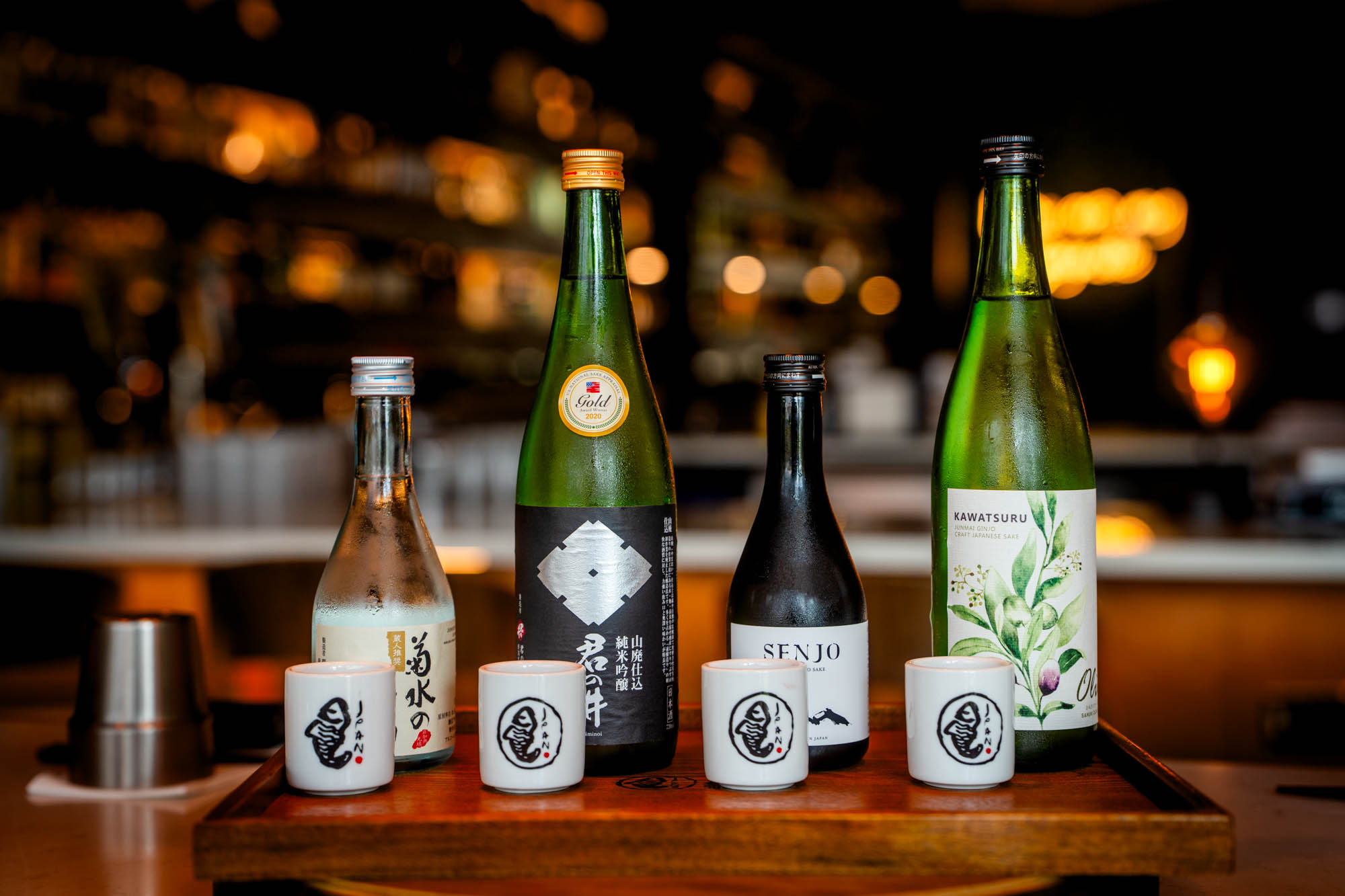
Variety is the spice of life when it comes to the sake offerings at JPAN Sushi and Grill. “When I set this menu up, I did it so that each bottle was very different from the next,” says Bar Director Max Wheeler. “One of our owners, Anderyas Putranto, and I had four different distributors come out and we tried 30-40 different sakes. Some are earthy and mushroomy. Some are really sweet, some are floral, some are almost mineral water-esque and dry, so there’s something for everybody.”
One of the most distinct offerings JPAN features is the Kawatsuru Olive Junmai. “It comes from the only part of Japan that grows olive trees and they make olive oil there. That sake brewery wanted to use parts of olive trees and branches and leaves in the process, so it has this almost oily texture to it,” says Wheeler. “It’s not the most savory sake that I have, but it is definitely one of the most unique.”
Wheeler’s personal favorite is the Senjo Junmai Daiginjo, a type of daiginjo sake made without any added distilled alcohol. The Senjo sake brewery, in Nagano, Japan, uses water from the Japanese Alps and has been brewing sake since 1866. “The water they use is so specific, the land that they grow the rice on is so specific, that it gives it this almost minty, honey, bright flavor that a lot of sake doesn’t have,” says Wheeler. “A lot of sake ends up tasting like a toasted rice or rice custard, but this one is very light, very floral and great with a meal.”
Tsunami Sushi and Hibachi Grill
At Tsunami Sushi in Lakewood Ranch, beverage director/lead bartender David Roth has an agenda: to introduce customers to sake. Sometimes that means using sake in cocktails, with something like a sake-tini on the tamer side or a shaken cocktail with nigori or “cloudy” sake that tends to be sweeter. Other times, that means heating up Sho Chiku Bai’s classic junmai sake, a sake brewed without any added distilled alcohol. Most of the time, however, it means directing diners to Tsunami’s extensive list of cold bottled and premium sakes.
“If you like your sake cold, I’ll ask some follow-up questions,” says Roth. “Do you like your sake sweeter, drier or somewhere in the middle? Then we go from there.”
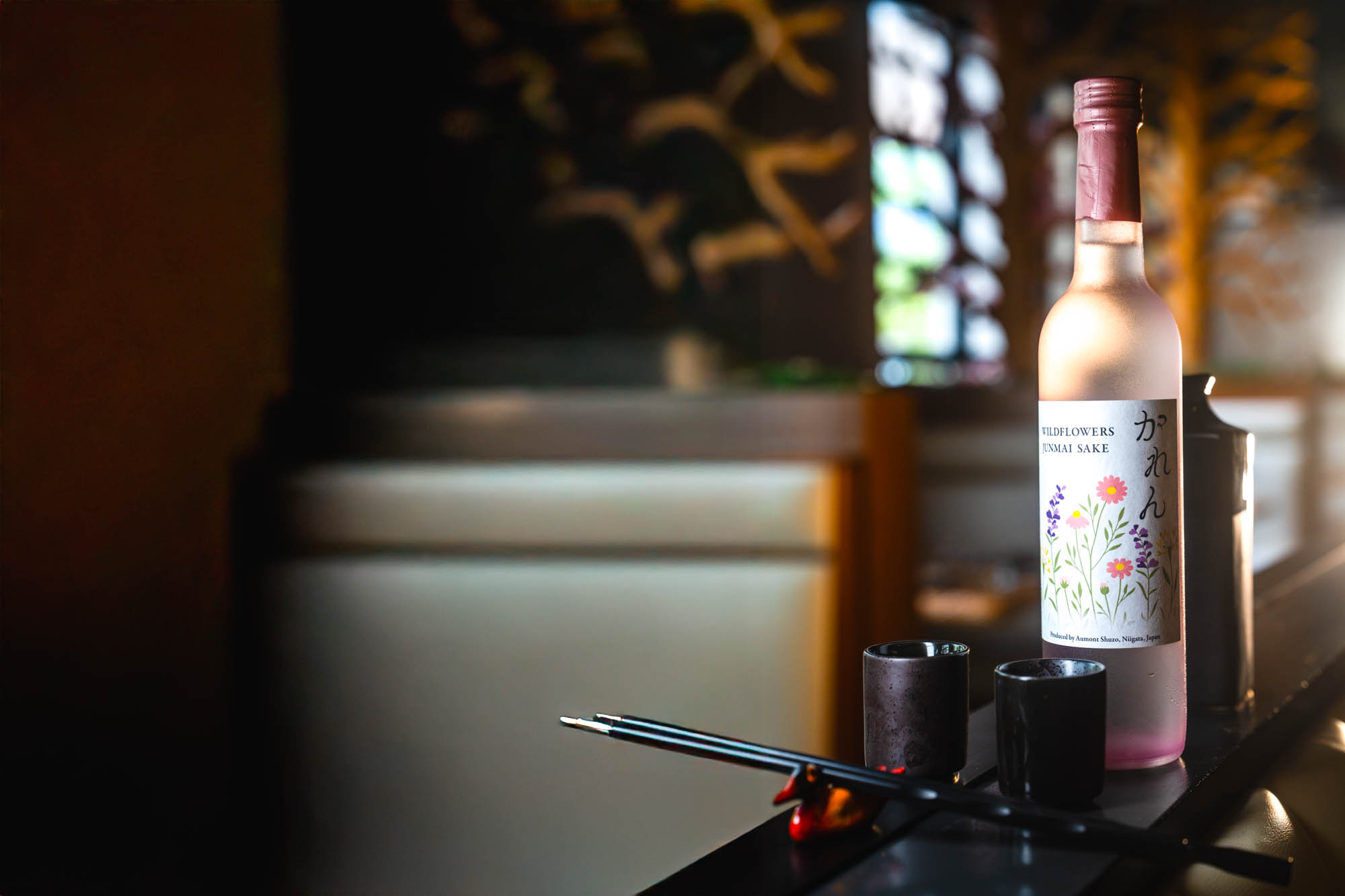
Every bottle has a unique flavor profile and behind it, a story. Take the Wildflowers Junmai from the Ichishima Sake Brewery, for instance, with notes of lychee, apple and strawberry. The Ichishima Sake Brewery, which is over 200 years old, was one of the first breweries to accept the employment of female sake brewers. “For centuries, sake was a very male-dominated industry. Now, female sake brewers are being accepted and Wildflowers is one of those sakes—it’s light and sweet, but not cloying with lots of tropical fruit,” says Roth.
One of the more unique offerings that Tsunami features—along with the flurry of off-the-menu sakes that Roth will bring in for guests to try in flights—is a taru sake from Kiku-Masamune. “It’s aged in Japanese cedar wood, which gives it that little extra note,” says Roth. “It’s fun and unique and something that you don’t see all the time.”
KOJO
The world of sake is vast and, to many, mystifying. The team at KOJO aims to break down those barriers, with a drink menu that features a variety of premium sakes in different styles. Premium sake is categorized, in part, by the extent to which the rice is milled. For a sake to be considered premium, it must have a rice polishing ratio of 70% or lower—meaning that at least 30% of the rice grain has been milled away. “Technically, after all the husk is shaved down, there are less bitter notes to the sake,” says Silvia Fridegotto, beverage director. “The more you shave into the rice, the more product you lose, but you end up with a finer, more refined taste, that in our opinion pairs better with our cuisine.”
Kojo also looks to delve into the story behind the sakes, getting to know where they are brewed and the history behind them. It’s what allows the team to serve a vast array of sakes—and be able to tell the customer exactly where it came from and how it was made. The Yuki Otoko “Yeti” for instance, harkens back to local legends of snowmen in the Niigata Prefecture, and has a dry taste with hints of steamed rice and banana. The Rhihaku “Dreamy Clouds” also from Niigata, is a junmai nigori, fit for the adventurous diner. “It’s got fermented papaya and pineapple skins and is a little strange
and dry,” says Fridegotta. “The Kiwami Hijiri “Sacred Mist,” however, is another nigori that tastes almost like a pina colada.” Kojo also features a nama sake, or unpasteurized sake, in the Kamoizumi “Red Maple.” “It has to be cold the entire time it is shipped here from Japan. Anytime you see nama on a menu, you know you’re in for a treat,” says Fridegotto. “You get this almost effervescent experience with tiny little bubbles, because the fermentation is still taking place."
Namo Izakaya Ramen and Yakitori
At Namo Izakaya Ramen and Yakitori, the sake offerings are as diverse as the different dishes on the menu. Like many establishments, if diners like their sake hot, then Namo Izakaya can serve them their house sake. If they prefer their sake cold, however, then a whole world opens up. While Namo Izakaya does serve unflavored, clear sakes—such as the smooth and ever-popular Bunraku Nihonjin—the restaurant features a host of nigori, or cloudy, sweet sakes, on its menu. Sakes such as Kukai Mango or nigori lychee or strawberry are served chilled, with a sweet, fruity flavor and a creamier texture. Nigori sakes have a distinct texture and mouthfeel because of the rice solids that are suspended in the liquid—nigori sake is pressed through a coarser filter than other sakes during the straining process.
The nigori sakura is milky and pink, flavored with cherry blossoms and strikes a delicate balance between sweetness and tartness. The Sho Chiku Bai nigori comes in flavors such as pulpy tangerine, grapefruit and pineapple. “We also have Yuzu Shibori, which is a larger sake that comes in a bigger bottle,” says Kim Nguyen, operations manager at Namo Izakaya. “Yuzu is a Japanese citrus fruit that has a tangerine-lemon flavor.”