


“Sarasota County has added, on average, 15 to 17 people a day for the last 20 years,” says Morris (Marty) Hylton III, president of Architecture Sarasota. “Over 140,000 people have moved here and a lot of them are new and don’t have a connection or understanding of our history. Historic preservation is a dialogue between the past, present and future and for people to really understand the community they live in, they need to see how it evolved over time, because that’s going to inform how we make better decisions moving forward.”
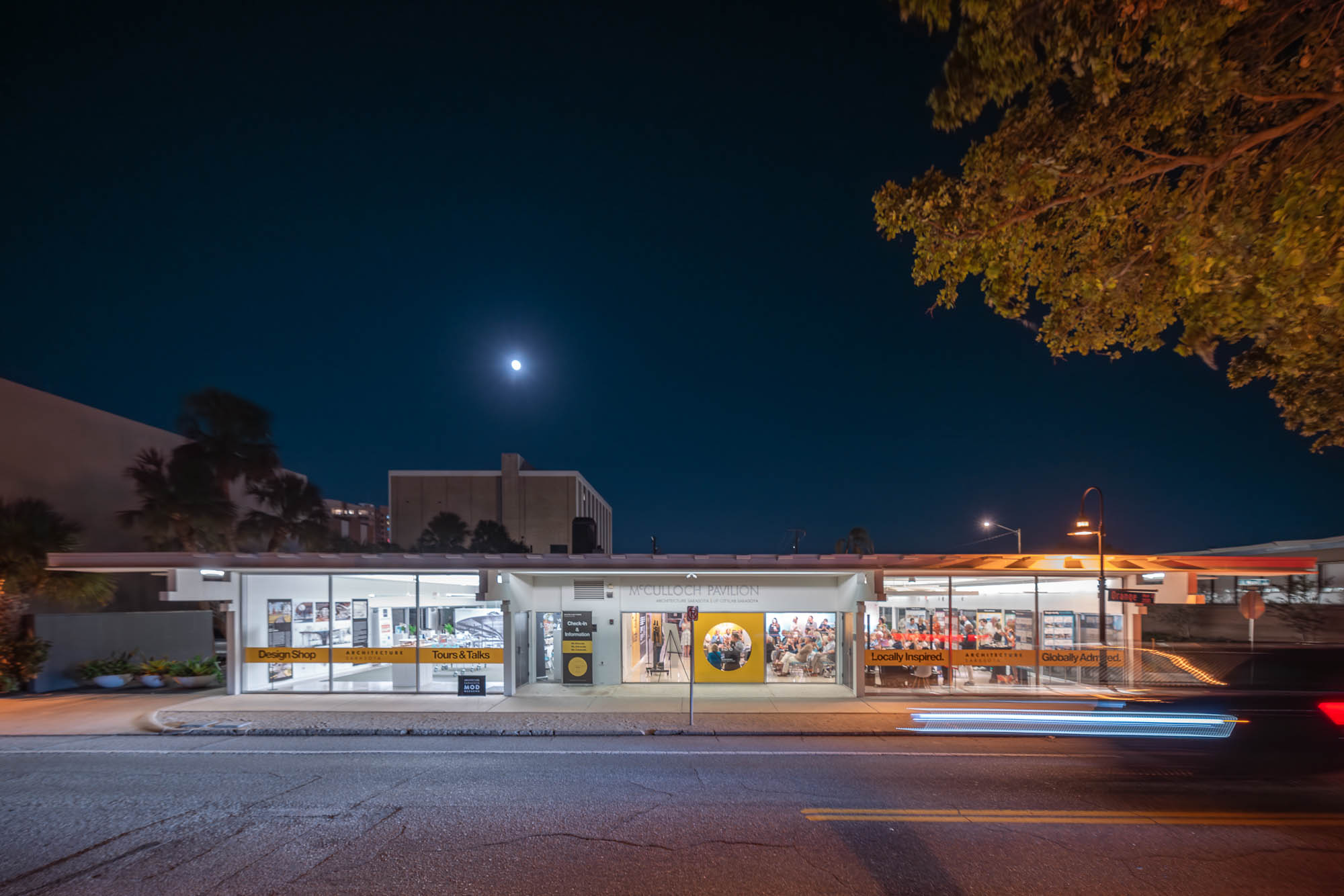
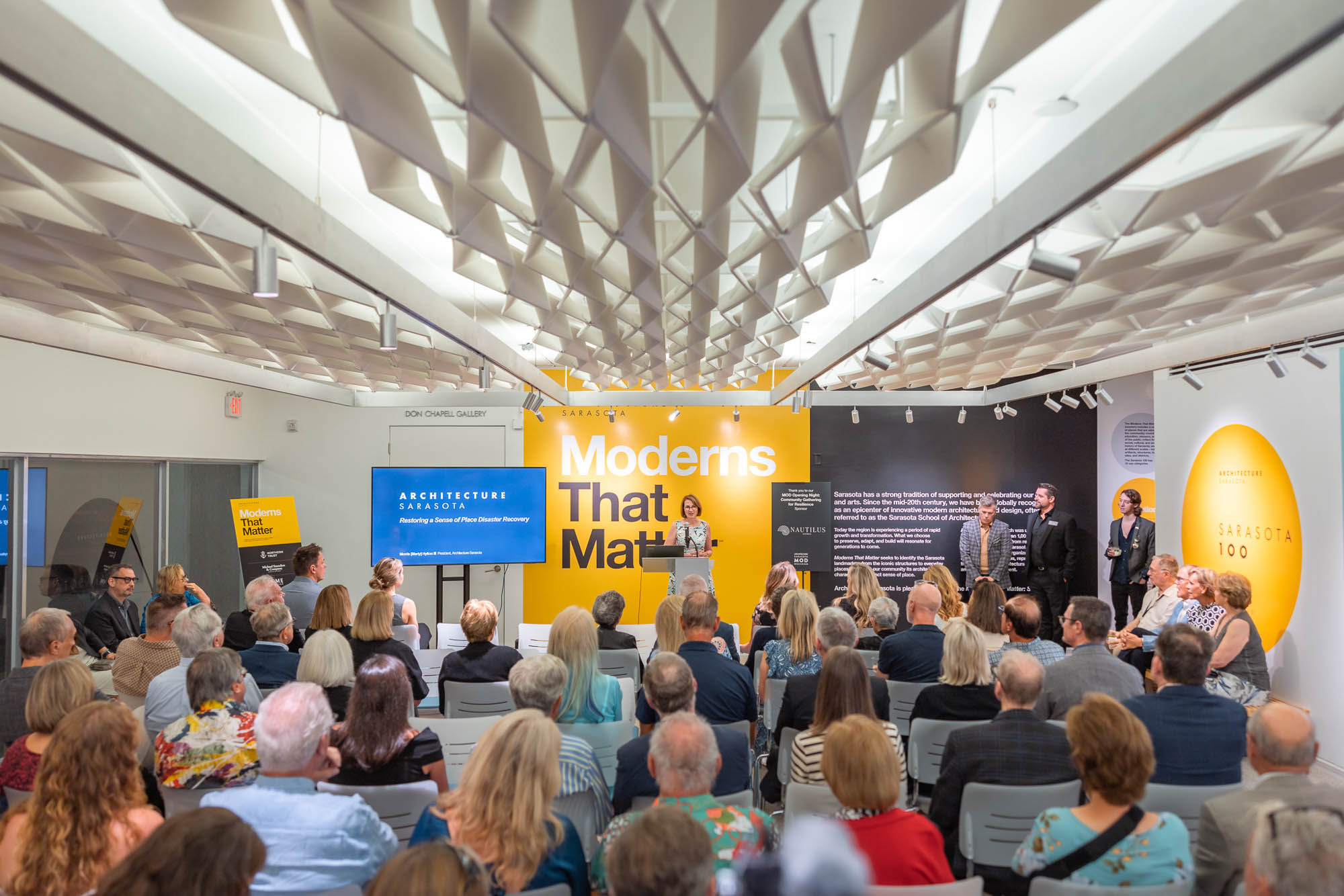
Fostering that connection to the community is the driving force behind why Hylton and Architecture Sarasota continue to host the annual MOD Weekend, this year occurring on November 11-14. MOD Weekend 2025 is aptly themed Moderns That Matter, based on Architecture Sarasota’s exhibition and accompanying publication Moderns That Matter: The Sarasota 100. A chronological listing of 100 places and spaces that have shaped Sarasota from 1925 until present day, the Sarasota 100, was created to tell the story of Sarasota—from a small circus city to a center of art, culture and design on Florida’s Gulf Coast. “1925 was the year that Ralph Twitchell came to Sarasota to oversee the construction of the Ca’ d’Zan. We use 1925 as a starting point, because Twitchell is really the individual who introduced modern design principles to Sarasota,” says Hylton. “The Sarasota 100 chronicles 100 years of our architectural heritage and is a celebration of our built environment.”
Organized across 10 different use categories, the Sarasota 100 is the product of a multi-year research and public nomination process that Architecture Sarasota first began in April 2023. The goal was to identify not only what is historically significant within Sarasota’s built environment—from single-family residences to public spaces to commercial buildings and beyond—but to also create a connection point for those who call Sarasota home. By showing the world the path that Sarasota has taken to where it is today, Hylton hopes to incite a better future for tomorrow. “It really focuses on that continuum of good design that makes up Sarasota and what we’re known for, and the idea that not everything is in the past. What are the projects being done today and the types of buildings that people think really represent our community?” says Hylton. “We surveyed 800 properties ourselves and looked at thousands of structures. We studied every cultural resource survey of Sarasota since 1977, we looked at every building or district on the National Register of Historic Places, as well as the city and county registers, as well as a ton of archives and exhibitions.”
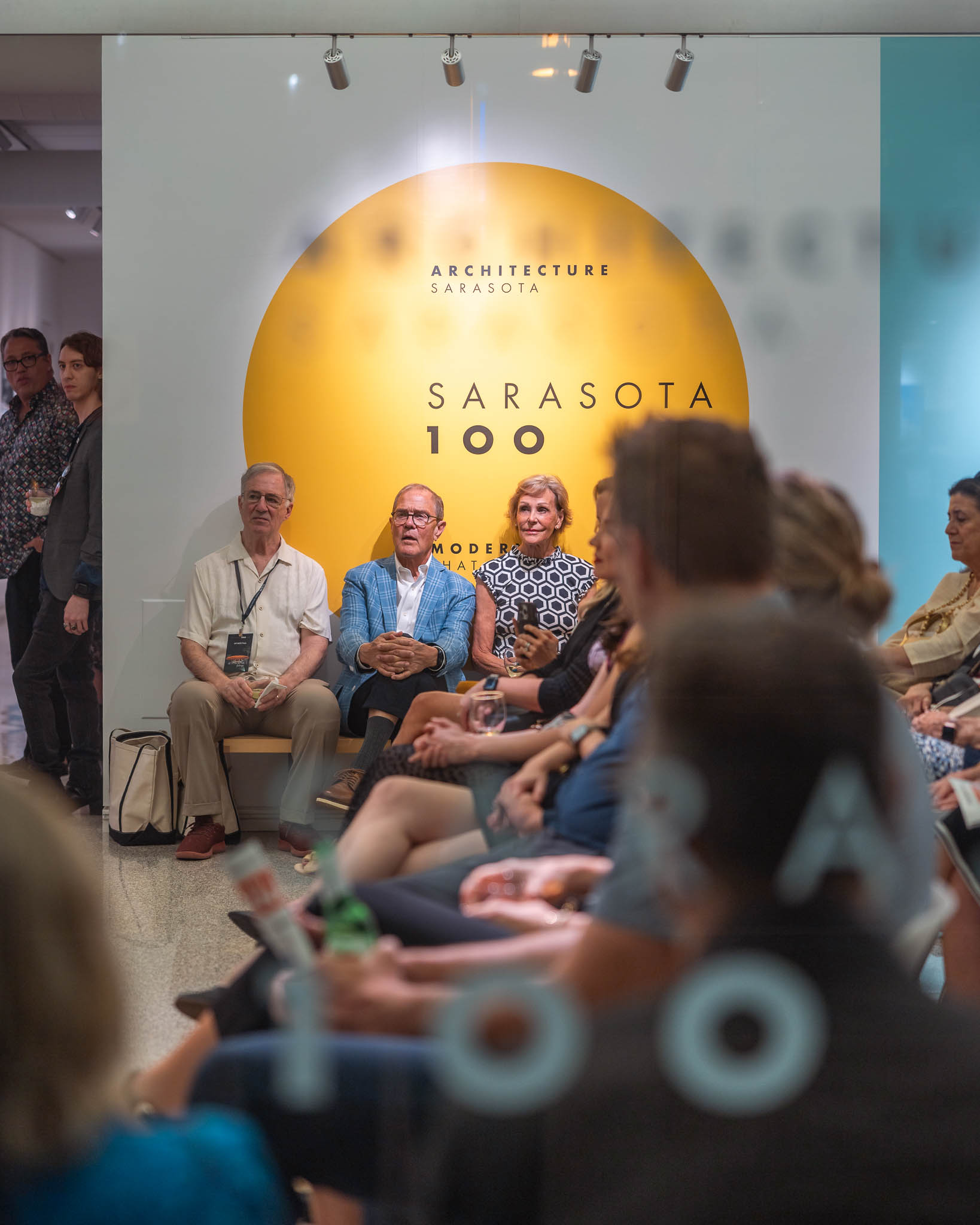
Architecture Sarasota’s internal efforts were mirrored by a 90-day public nomination process, which launched at MOD Weekend 2023, and garnered over 580 nominations. For Hylton, the objective of the nomination process wasn’t to just point out the obvious—properties like Paul Rudolph’s Umbrella House, for instance, are iconic symbols of the Sarasota School of Architecture—but also to highlight buildings and districts that have personal and historic significance to the community. From local churches to the Bahia Vista Estates mobile home community, the places and spaces cataloged in the Sarasota 100 use the threads of design to weave together the fabric of our community. “Some people wrote, ‘I drive by this building on my way to work and it makes me smile,’” says Hylton. “Others mentioned that their grandparents got married in a certain church and they have a personal connection to it, which was really amazing.”
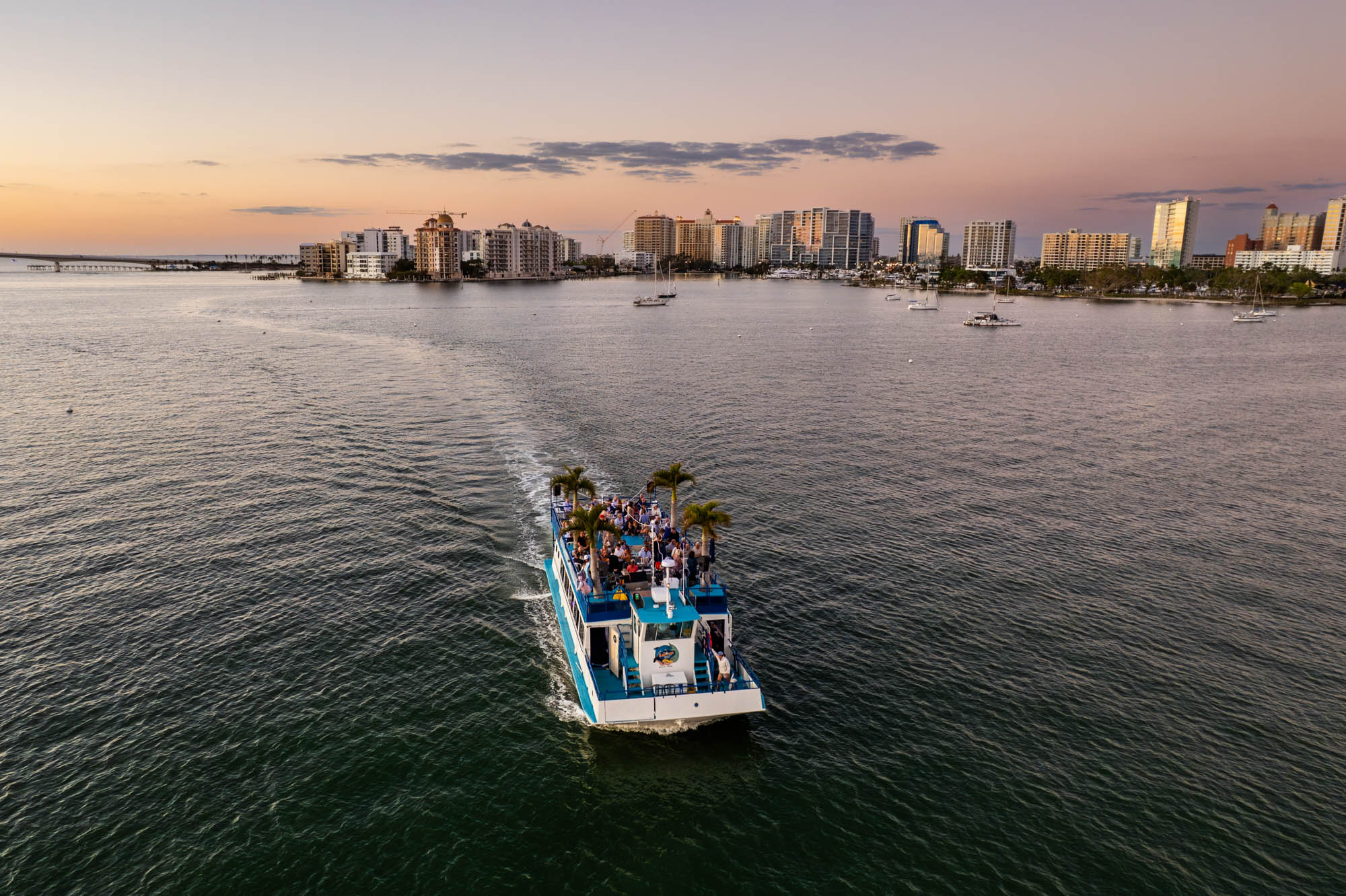
MOD Weekend 2025 structures itself around the different aspects of the Sarasota 100. The weekend is bookended by tours that focus on the waterfront—no. 100 in the Sarasota 100—with Friday’s Moderns That Matter: The Bay Architecture Tour and Sunday’s Moderns That Matter: Sarasota 100 Tour by the Water. The waterfront, a listing drawn from an anonymous nomination, plays a crucial role in telling the story of Sarasota’s development and charting the city’s future. “Our entire cultural identity in Sarasota is tied to the water, whether it’s the Bay, the Gulf, the Myakka River or the tributaries. The development of the waterfront in Sarasota over 100 years has been extraordinary,” says Hylton. “Our relationship with water has also changed and evolved over time.” The heart of MOD Weekend 2025, however, lies in Saturday’s programming. The day begins with the Moderns That Matter: Symposium, where the World Monuments Fund (WMF) will be presented with Architecture Sarasota’s Phillip Hanson Hiss Award, which honors champions of innovative design while commemorating Hiss, one of the founders of the Sarasota School of Architecture. 2025 marks the 20th anniversary of WMF’s Modernism-at-Risk program, one of the first initiatives to bring attention to the threats facing modern architecture—the program’s first grant was to preserve Paul Rudoph’s historic Riverview High School.
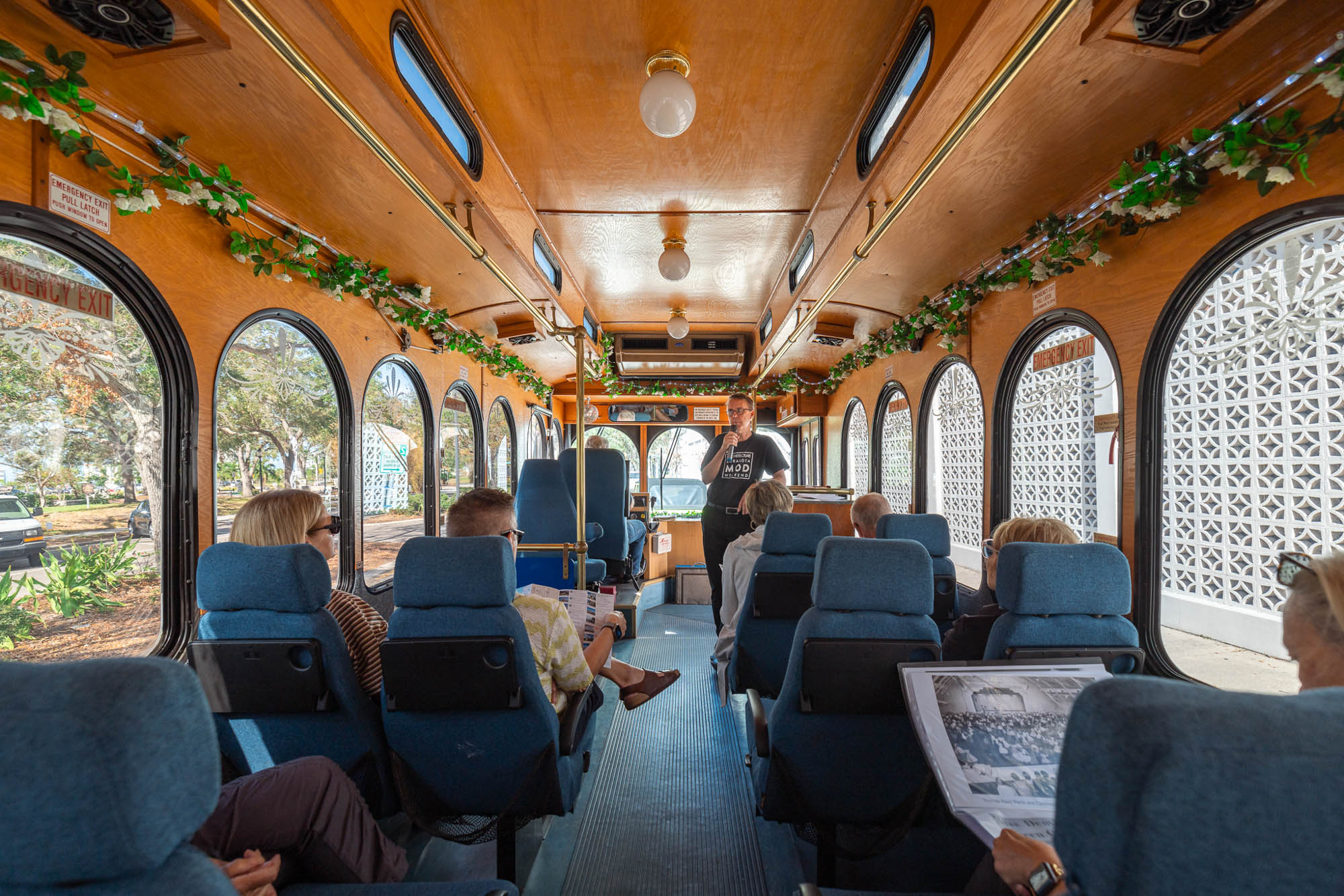
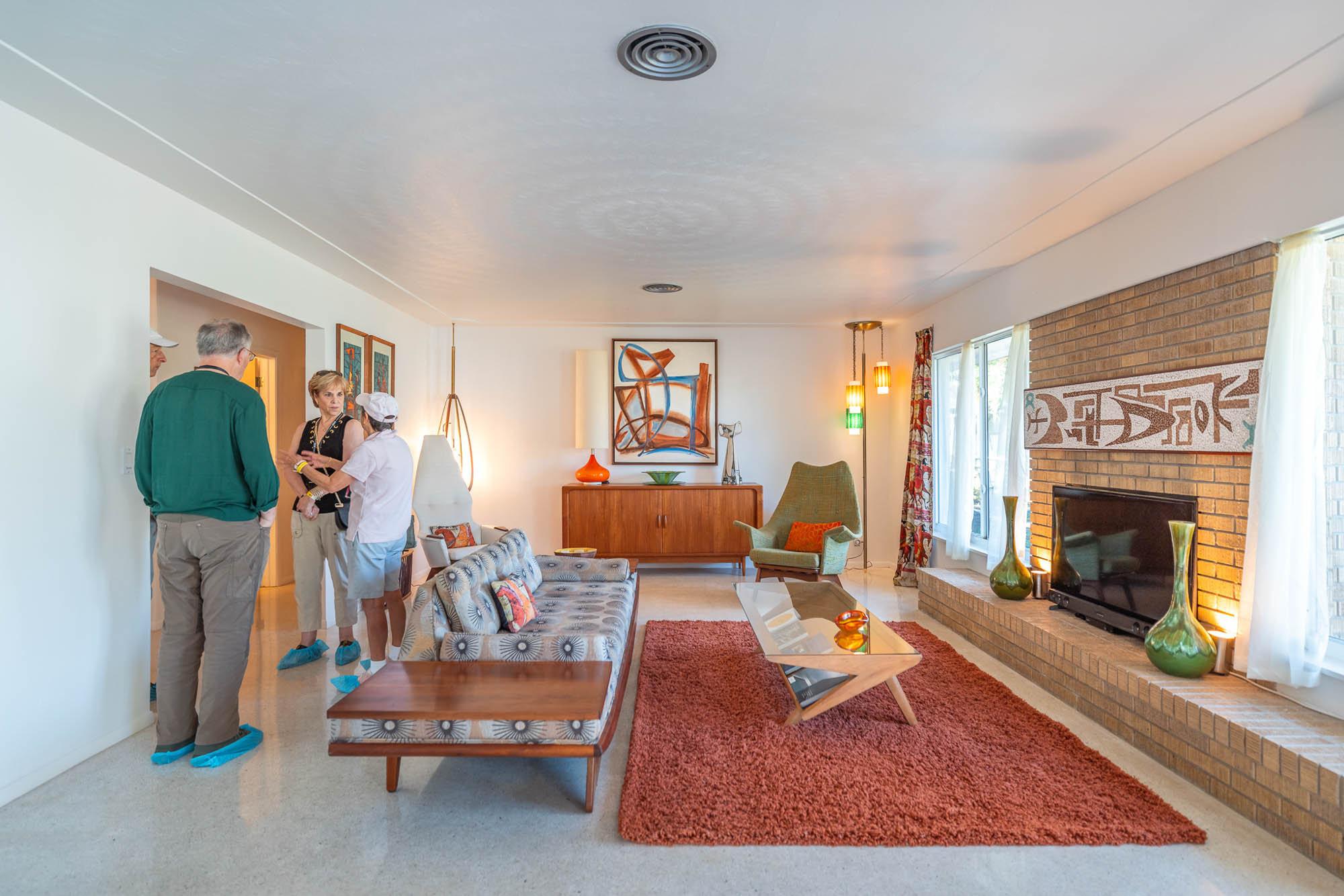
Following the symposium is a driving tour, either self-guided or in a shuttle, that takes participants on a journey through the different decades of the Sarasota 100. The residencies featured on the tour—Hylton hopes to share six to eight—are all representative of the different styles of architecture that have permeated throughout the last century of Sarasota. From 1949, the tour features the Lustron Home #1687, one of roughly 2,500 ‘kit homes’ from the Lustron Corporation, a prefabricated framework of porcelain-enameled steel plates; and the Nate and Muriel Eagle House, a shining example of the Art Deco Moderne style of the time. In addition to two mid-century modern homes from the South Gate neighborhood—number 27A on the list—the tour will also feature contemporary examples of the Sarasota School of Architecture, which, according to Hylton, is still alive and well. Hive Architect’s heralded Shibusa house, built in 2020 on Siesta Key, consists of two raised, intersecting pavilions situated above the landscape, and is a testament to the lasting legacy of the Sarasota School of Architecture. The clean lines, raised structures and large windows are reminiscent of the original principles of the movement, as championed by architects such as Tim Seibert, Paul Rudolph and Phillip Hiss III.
“People are drawn to Sarasota for different reasons. Of course there are the beaches, which are beautiful, but I think there are other elements to it that they might not be able to fully articulate—I think design is part of that,” says Hylton. “There are so many people here that don’t know about the Sarasota School of Architecture, that don’t understand architecture and design’s role in our community and that Sarasota is this global epicenter for design innovation.”