

A dumpling is deceptively simple.At its most essential, it is just dough—sometimes wrapped around a filling, sometimes left plain—pinched, folded or rolled into shape before being boiled, steamed, baked or fried. But that simplicity is precisely what makes it so universal. With only flour, water and whatever ingredients happen to be on hand, you can create something comforting and satisfying that feels both familiar and special. Because the idea is so straightforward, variations of dumplings are a staple in almost every culture around the world. They show up in different shapes, sizes and textures, sometimes plump and pillowy, other times delicate and thin. They can be spooned into soup, stacked high on a platter, or crisped until golden, each variation echoing the tastes and traditions of the place it comes from. That is what makes dumplings so fascinating. They may share the same foundation, but the subtle nuances and small details give insight into the culture that created them. Dumplings aren’t just food; they’re edible expressions of history, geography, and identity.
Dumpling Development
The word dumpling is thought to have first appeared in English in the early 1600s, referring to a small lump of dough cooked by steaming or simmering. Over time, the definition expanded to include filled dumplings. But as a concept, the dish existed long before this specific name. The origin of dumplings isn’t pinned to a single place or culture, because the concept is so simple that it likely developed independently in different parts of the world. The earliest written references are often traced back to China, where legend credits a physician named Zhang Zhongjing during the Eastern Han Dynasty (around 200 CE). He is said to have wrapped meat and herbs in dough to help people fend off frostbite in the winter, creating something very much like the dumplings we know today. At the same time, similar foods were appearing elsewhere. In the Middle East and Mediterranean, filled pastries and dough pockets were common in ancient times, while in Europe, dumplings developed both as hearty additions to soups and stews and as a way to stretch limited ingredients. Because “dumpling” is really an umbrella term for many different foods, it’s not so much that they originated in one place as that they emerged wherever people had flour, water and creativity.
Pan-Asian Pleasures
If you want proof of just how versatile dumplings can be, look no further than Asia. Within a single continent, you can find an astonishing spectrum of styles.
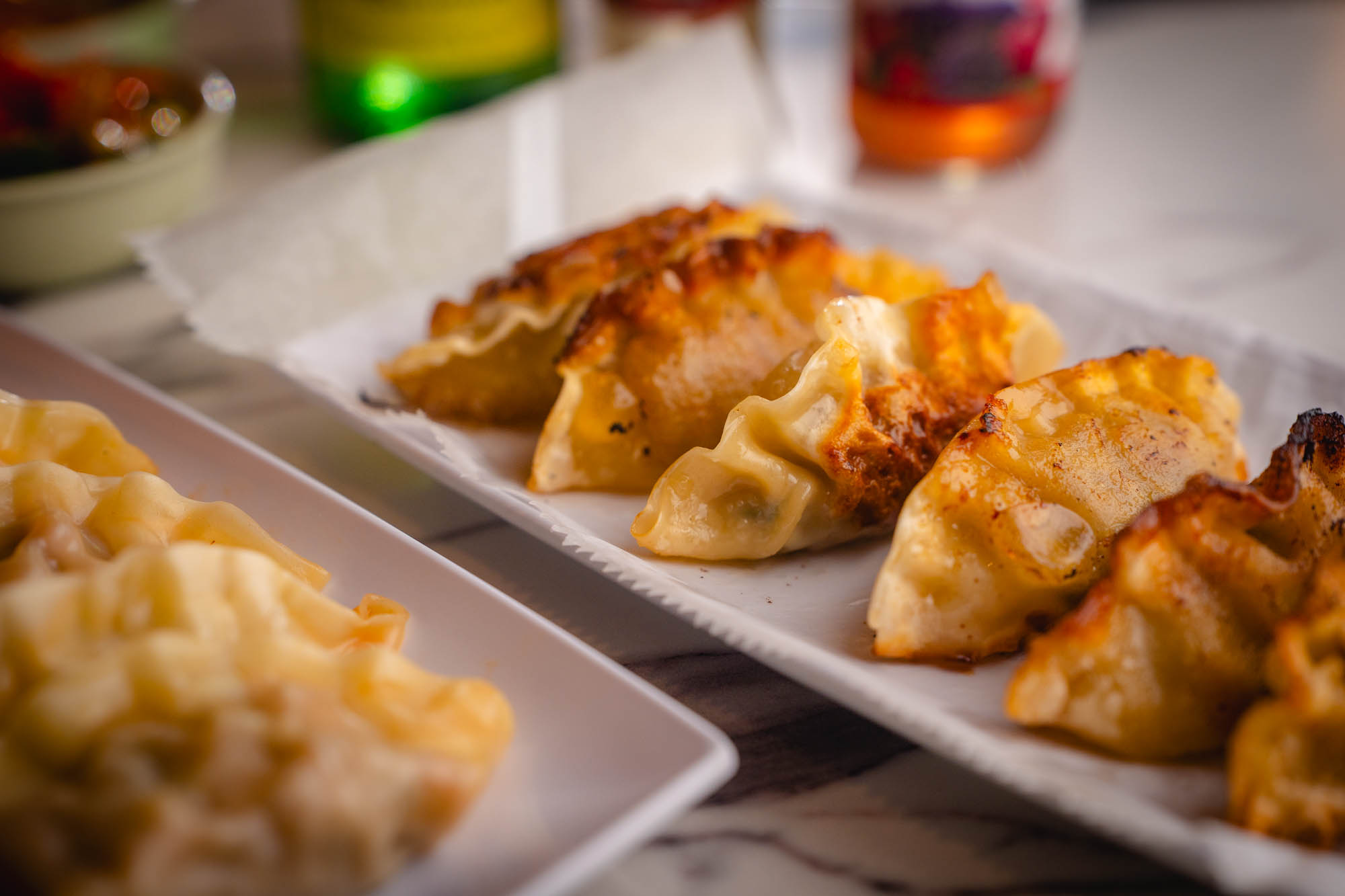
When people think of dumplings, Chinese varieties are often the first that come to mind. They are among the oldest and most diverse interpretations of the dish, with a history stretching back nearly two thousand years. Jiaozi are the classic dumplings, typically crescent-shaped and filled with meat, vegetables or a mix of both. They can be boiled, steamed or pan-fried. Potstickers, a popular variation, are pan-fried on one side until golden and crispy while the rest of the dough steams to tender perfection. Wontons are thinner-skinned dumplings, often filled with a simple mixture of meat or shrimp and commonly served in a light, flavorful broth. And these are just a few examples of China’s rich and varied dumpling landscape.
Japan has taken the dumpling concept and made it distinctly its own. Gyoza are perhaps the most famous: thin-skinned dumplings filled with ground meat and vegetables, typically pan-fried until the bottoms are crisp while the tops stay tender. Meanwhile, in Korea, mandu are the Korean version of dumplings and the word refers broadly to dumplings in general rather than one specific type. They can be filled with a mix of ingredients, including pork, beef, chicken, tofu, vegetables, kimchi and glass noodles.
“The earliest records suggest that mandu were introduced to Korea sometime in the 14th century, during the Goryeo Dynasty. They may have arrived via the Silk Road through Mongol influence,” says Jeffrey Choi. Choi and his brother Bryan co-own J’s Korean Food, a family-owned and operated Korean restaurant that opened in Sarasota in October of 2024. Their menu is built on recipes passed down from three generations.
“Once adopted, Koreans made mandu their own by adjusting fillings, seasonings and preparations to suit Korean tastes,” Choi continues. “That’s how kimchi mandu, tofu and glass noodle mandu and other uniquely Korean versions came about.”
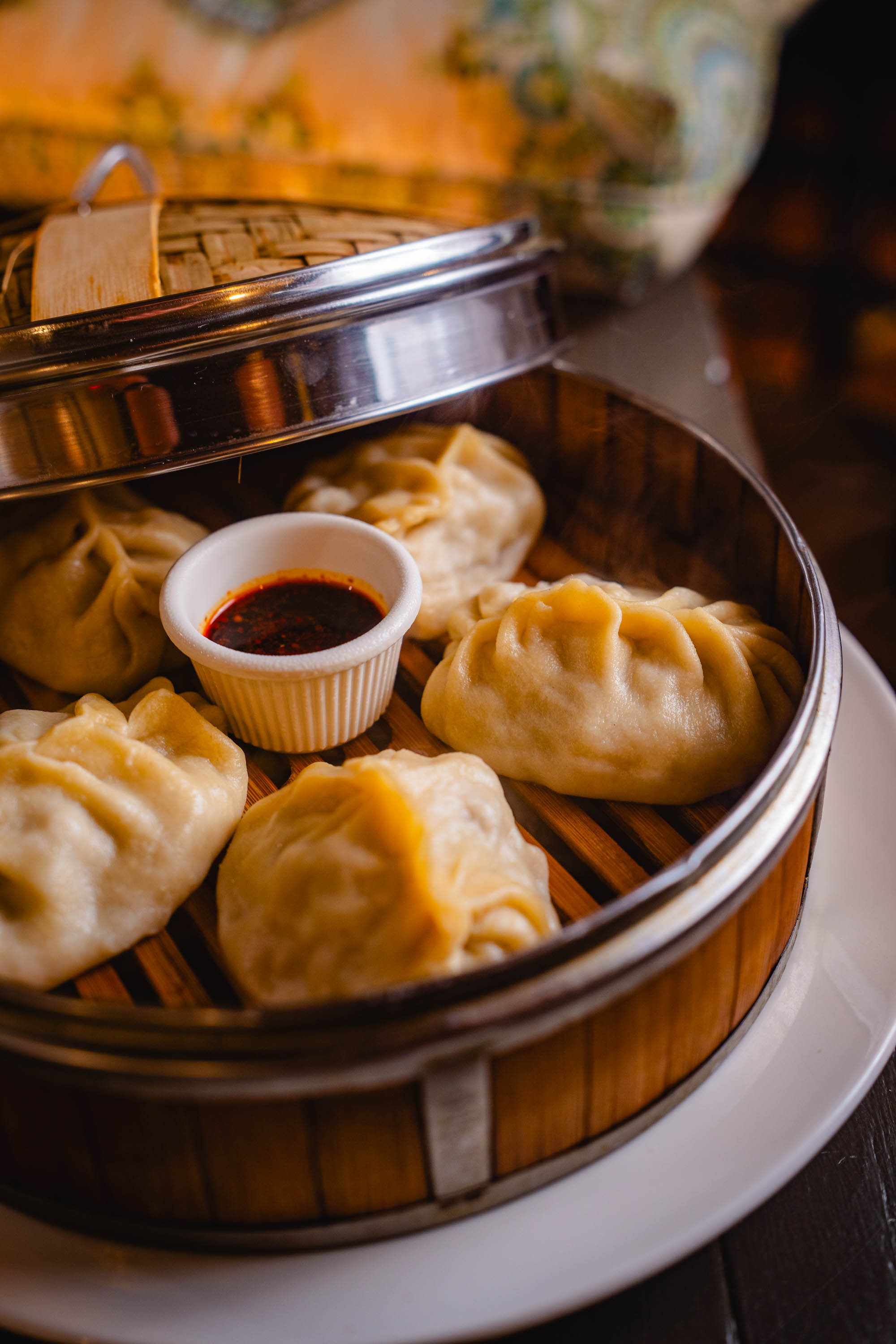
These are just a few of the East Asian dumpling varieties. South Asia has its own rich take on dumplings, often hearty, spiced and deeply rooted in local culinary traditions. Momos, popular in Nepal, Tibet and northern India, are soft, steamed or fried dumplings typically filled with meat, vegetables, or paneer, and served with tangy dipping sauces. Samosas are also considered South Asian dumplings, though they’re a bit different from the steamed or boiled varieties you might think of. They are typically triangular, deep-fried or baked pastries.
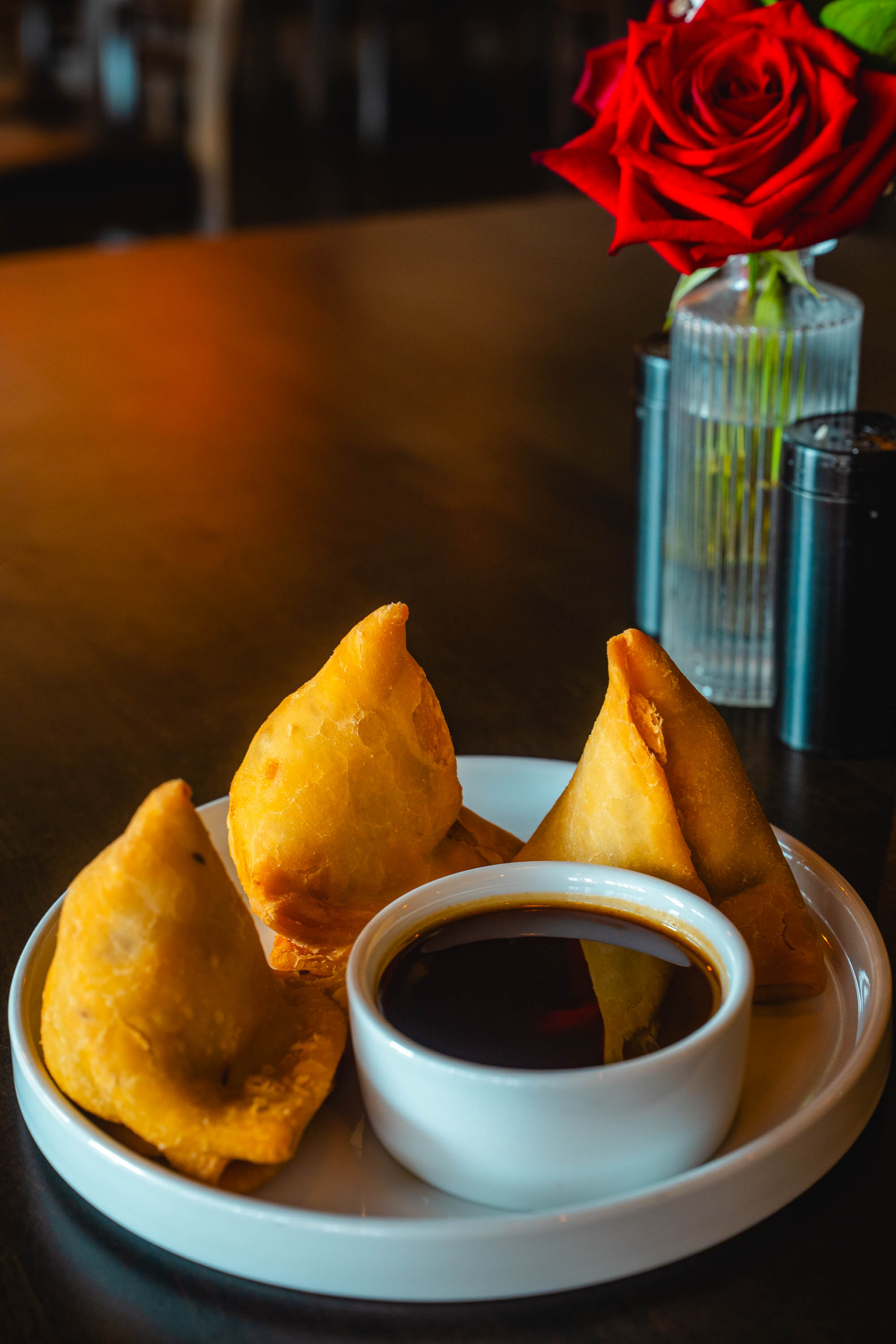
“Our samosa filling is made with ginger, garlic, onions, green peas, potatoes and garam masala,” says Joshy Pallavi, who co-owns Tikka Indian Cuisine in Venice and Sarasota and Spice Indian Cuisine in Sarasota. “In India, everyone has their own version of garam masala. Based on what region of India you are from, the filling could also contain beetroot or carrots.”
At Tikka Indian Cuisine, the crispy, golden samosas are served with a sweet and sour tamarind chutney made with jaggery, a coarse dark brown sugar made in India. It’s a perfect representation of how local ingredients make different dumpling variations unique to the region.
European Eats
Like Asia, Europe is home to seemingly endless varieties of dumplings. Spaetzle, a soft, chewy dumpling from Germany and Austria, is made from a simple batter of flour, eggs and water or milk, often served as a side to soak up rich sauces. In Central and Eastern Europe, pierogi are beloved staples. These soft pockets of dough are filled with potatoes, cheese, meat or even fruit, often boiled and then lightly pan-fried. In Scandinavia, dumplings appear in forms like kroppkakor, potato-based dumplings filled with pork and onions. And believe it or not, ravioli are technically considered dumplings.
Garden of Joy restaurant opened in Sarasota in December of 2023 and serves a variety of regional dishes from Russia, Ukraine and Georgia as well as Central Asia. One of their menu mainstays is pelmeni, small Russian meat-filled dumplings that originated in Siberia. Pelmeni were ideally suited to the Siberian environment because of their practicality and durability. In the harsh winters, families could prepare large batches of the dumplings, freeze them outdoors and store them for months without spoiling, essentially creating an early form of frozen convenience food. Their small, uniform size made them easy to cook quickly by boiling, which was useful in regions where fuel could be scarce and efficiency mattered. The meat fillings provided much-needed protein and fat to sustain people through long, cold seasons, while the thin dough wrapper stretched those ingredients further, making the dish both economical and filling. Pelmeni also became popular among hunters and travelers, who could carry sacks of the frozen dumplings into the wilderness, then cook them easily over a campfire. This portability and preservation factor helped pelmeni become not just a household staple in Siberia but also a vital survival food in extreme climates.
“Every family has its own recipe, and in our restaurant we prepare them just as our grandmother taught us,” says owner Oxana Li. “We make the dough with plenty of fresh eggs, knead it until smooth and let it rest. For the filling, we use a blend of beef and pork ground together with aromatic herbs and spices. The dough is rolled out, cut into small portions and filled with the savory mixture before being shaped into delicate dumplings. We serve our pelmeni with sour cream, as is customary in Europe, but at home they are often enjoyed with soy sauce.”
In Li’s family, pelmeni are prepared for New Year’s Eve. One dumpling is made with a hidden coin inside as a sign of luck and hidden prosperity for whoever finds it.
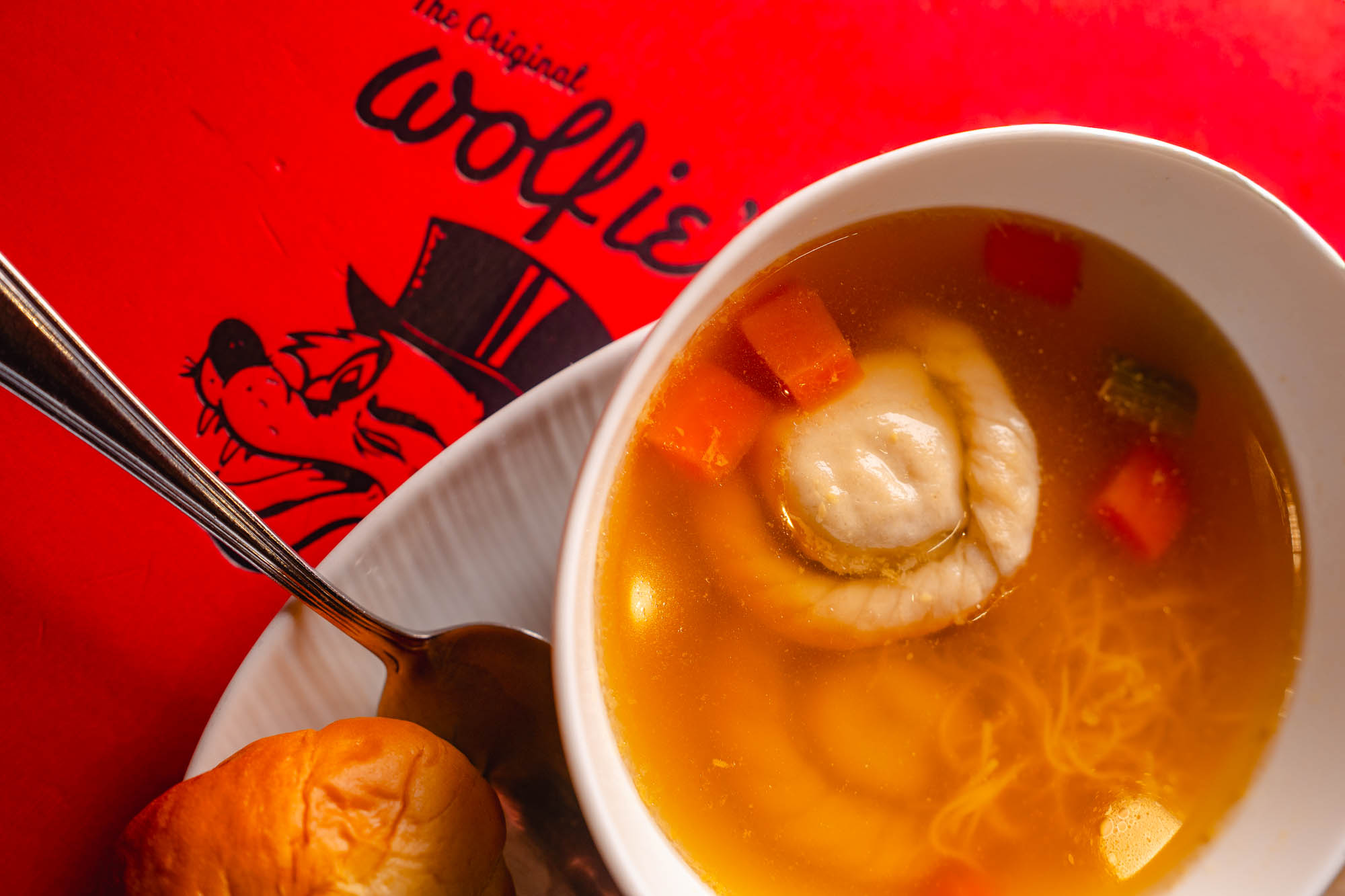
Just as pelmeni became a staple of Russian kitchens, Jewish communities in Eastern Europe developed their own distinctive dumpling traditions in kreplach and matzoh balls. Kreplach are small pockets of dough filled with meat, potatoes or other savory fillings, most often simmered in chicken soup. Their form and preparation show clear parallels with neighboring dumpling traditions like pierogi and pelmeni, reflecting how Jewish cooks adapted regional practices to fit within their own dietary laws and holiday rituals. Matzoh balls (or kneidlach) also originated among Ashkenazi Jews in Eastern Europe, where matzoh meal provided a flour substitute for dumplings during Passover, when leavened bread is forbidden. Over time, they became an everyday comfort food, often associated with Friday night dinners and holiday gatherings. While Ashkenazi Jews carried these dishes with them as they migrated, Sephardic and Middle Eastern Jewish communities developed their own versions, sometimes lighter or more herb-forward, showing how the dumpling form traveled and transformed across cultures. Together, kreplach and matzoh balls illustrate how Jewish culinary traditions were deeply rooted in the Eastern European landscape yet flexible enough to adapt, endure and spread worldwide. Both dumplings are menu staples at The Original Wolfie’s Restaurant in Sarasota, a Jewish deli with deep roots and a rich history specializing in comfort food.
“There are many different ways you can cook kreplach. You can fry a kreplach, you can serve it in chicken broth and you can fill it with many different things,” says Jason Starkman, the operations manager at Wolfie’s. “In our kreplach, we use brisket and caramelized onion, and to give it a bit of extra flavor we put a little bit of chopped liver in it as well. There’s something about the mixture of putting the kreplach in the soup with shredded chicken and noodles. It’s just a great combination that never dies. It’s one of those things that’s lasting.”
Matzoh is a staple ingredient in Jewish cuisine. This unleavened flatbread is made from just two ingredients, flour and water, and mixed and baked quickly to prevent natural fermentation or rising. The result is a crisp, cracker-like bread that holds deep cultural and religious significance in Jewish tradition. Matzoh is most closely associated with Passover (Pesach), the Jewish holiday that commemorates the Exodus from Egypt. According to tradition, when the Israelites fled Egypt, they left in such haste that there was no time for their bread to rise. As a reminder of this story, Jews eat matzoh during the week of Passover.
“When you go to a Jewish-style restaurant, there are certain items you can try to judge if the restaurant knows what they’re doing,” Starkman says. “One of those is matzoh balls.” Matzoh balls are dumplings made from matzoh meal (ground matzoh) that is mixed with eggs, seasonings, water or broth and fat (traditionally chicken schmaltz). The mixture is rolled into balls and simmered in broth. Matzoh ball soup is the quintessential comfort food, and is often lovingly referred to as Jewish penicillin because it’s such a go-to meal when you’re under the weather. Matzoh balls tend to be one to two inches in diameter, but Wolfie’s is famed for their generously-sized take on this traditional food.
“A lot of people make smaller ones because they’re easier to control,” Starkman says. “When you get them really big like we make them, it takes a little more finesse.”
Latin American Delights
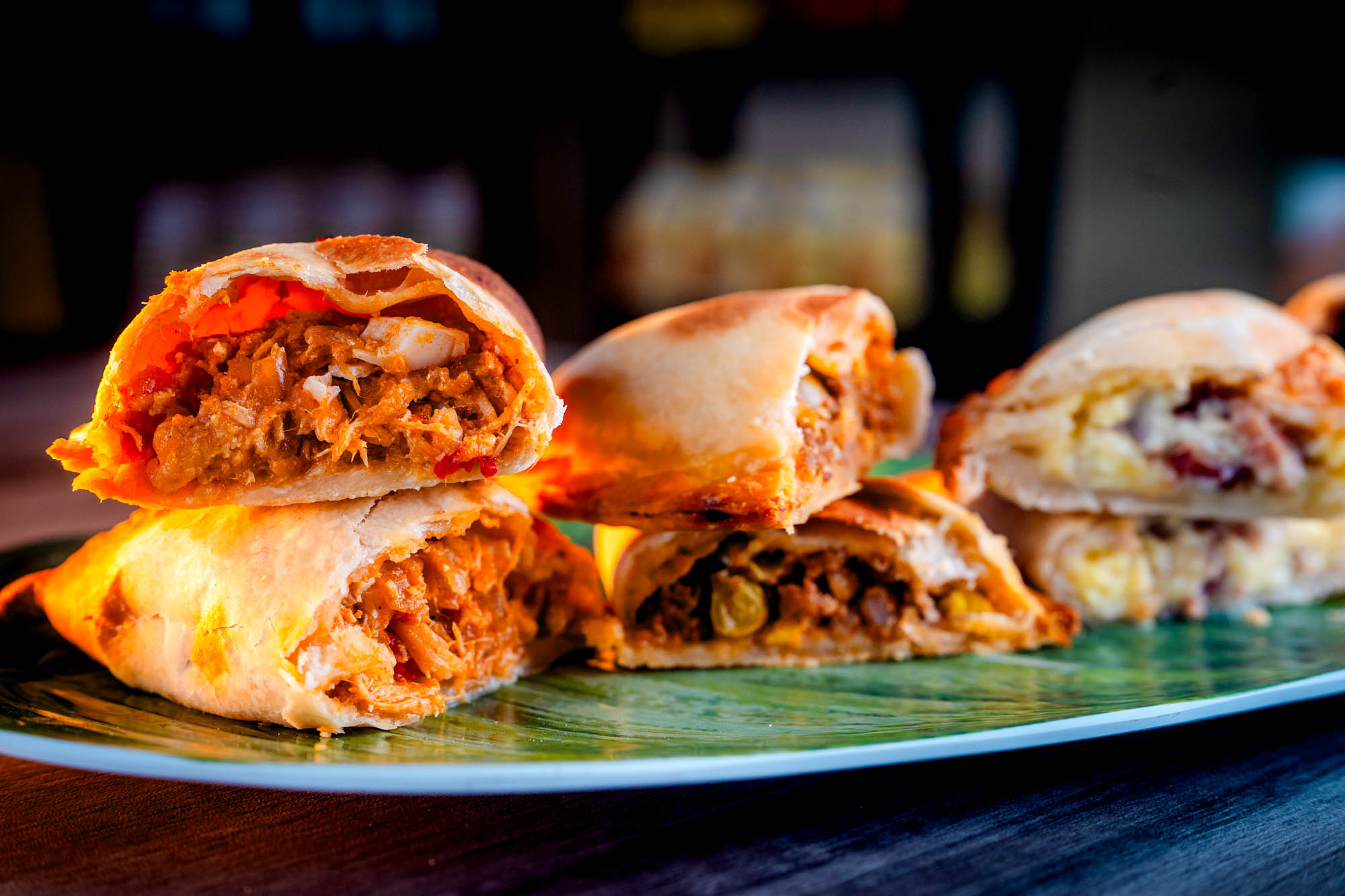
Empanadas occupy an interesting middle ground in the world of wrapped and filled foods. Empanadas occupy an interesting middle ground in the world of wrapped and filled foods. On one hand, they’re often described as hand pies: pastry pockets folded around savory or sweet fillings, then baked or fried to golden perfection. On the other hand, they fit neatly into the broad definition of a dumpling: dough encasing a filling and cooked through some method of heat. The reality is that empanadas could comfortably claim either identity. In a sense, they’re the Schrödinger’s dumpling of the culinary world—both dumpling and hand pie until you decide how to define them. For today’s purposes, though, we’ll open the box and firmly place them in the dumpling camp. Empanadas are thought to have originated in northwest Spain back in the 7th century, where they were originally a simple, portable meal for farmers and travelers. As Spanish colonizers journeyed across the globe from the 15th century onward, they brought empanadas with them. The concept of a stuffed pastry was readily embraced in Latin America, where it evolved to reflect local ingredients, tastes, and culinary traditions. Traditional Venezuelan empanadas are made with ground corn dough and a diverse array of fillings, while empanadillas in Puerto Rico are made of a flour base. Mexican empanadas are made of fried corn paste masa and are typically filled with taco ingredients. And in El Salvador, empanadas are made with plantain instead of a flour-based dough wrapping. Stefania Fochi is the owner of The Empanada Girl, a local business that started serving delicious handmade treats at the Sarasota Farmers Market in 2010. Fochi describes empanadas as “pockets full of deliciousness.” “My empanadas are made in Argentine style. This means the dough is a thin wheat dough that we make from scratch,” Fochi says. “Argentine empanada joints are known for making a wide variety of flavors which is what I specialize in—it’s the reason I only really offer empanadas, so that we can focus on that one product and make it to the best of our ability! In Argentina, our empanada fillings are all composed, which means each flavor has different ingredients and flavor profiles, but in the end are full meals. You get two empanadas, each of a different flavor, and you’ve got a whole meal!” At The Empanada Girl, you can find traditional Argentine flavors like beef, chicken, spinach, ham and cheese, but Fochi has also branched out into fusion flavors over the years. She offers a small variety of breakfast empanadas including her bestselling caramelized onion and mushroom recipe. She also has a guava and cheese dessert empanada that has been a perennial favorite for years. Her most popular flavors are also available with gluten free dough. “I began out of a passion for serving quality food that I could be proud of with the intention of spreading joy and comfort and serving our community nourishing food that could bring people together,” Fochi says. “Argentine empanadas happened to be the boat through which I was able to accomplish that.”