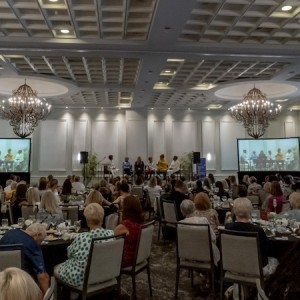



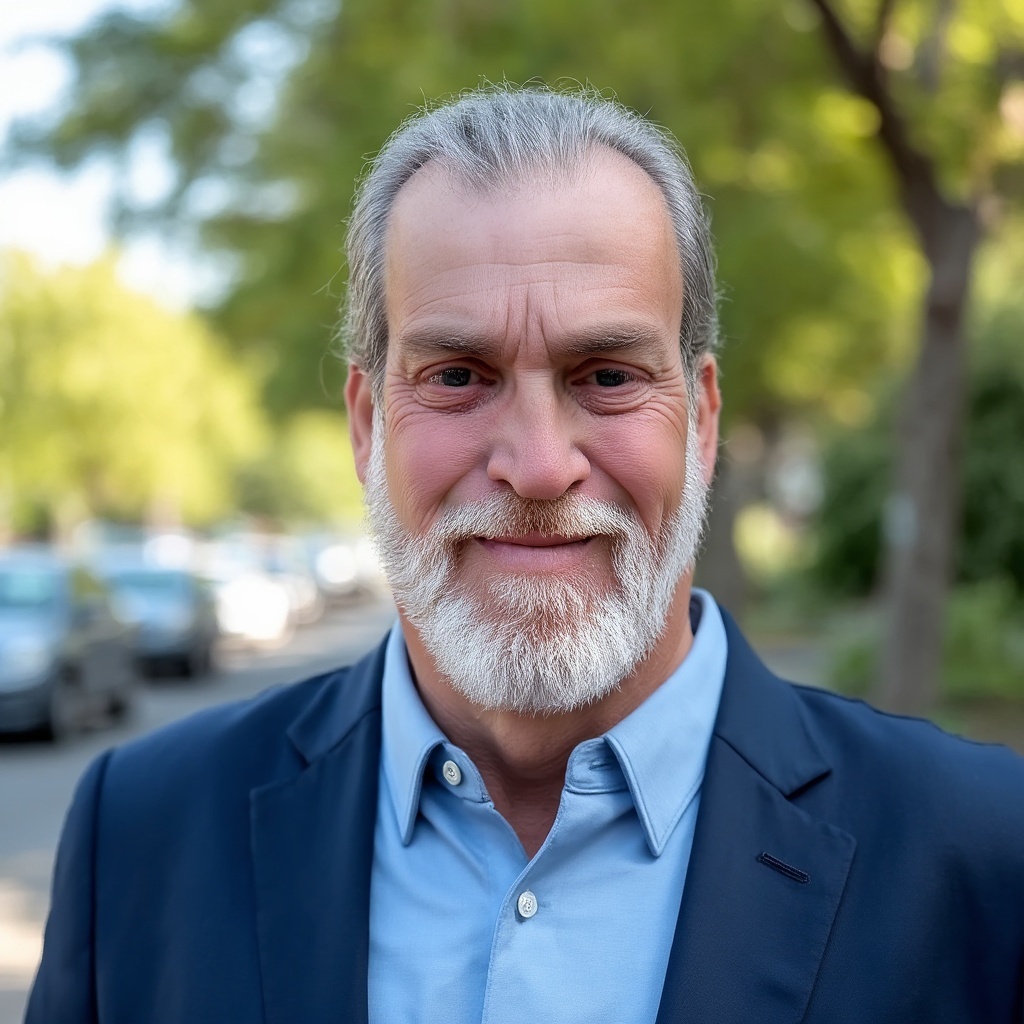
As part of its Urban Studies Speaker Series, Hoyt Architects welcomed professional arborist John Snow on February 18 for his presentation, The Urban Forest Lifecycle: Designing Cities with Trees That Last 50 Years or More. Snow is the president of the Florida Urban Forestry Council, owner-operator of Tree Check Up LLC, a Board-Certified Master Arborist and has been working in arboriculture and urban forestry for over 30 years. Snow sat down with SRQ Magazine to discuss his perspective on what trees can do for a city and how to build towards a better, greener future.
You spoke about a pervasive cycle of planting and removal of trees in urban areas long before the trees reach their full canopy potential. Why does that happen? JOHN SNOW I think the issue revolves around most people having a hard time visualizing in their mind's eye longer timeframes. People can budget for a year, but when you start thinking about five years from now, things get a little more hazy quite quickly. You say 10 years from now and it’s a very gray area. When you’re planning trees, you’re thinking about 50 or 80 years into the future. I hear quite often, “well, I might not even be here by then, so what does it matter?” Humans have inherent short-term thinking. The problem is, that doesn’t match the lifespan of trees that we’re planting in urban landscapes. I don’t think that there’s ever going to be perfection, but there are ways that we can begin shaping things to work better and that starts with the planning phase of implementing trees in urban environments.
How do you marry that philosophy with existing infrastructure? That’s where the challenge lies, as it requires a lot of creativity. You have to have people on equal standing—the arborist or urban forester needs to be on equal standing with the architect and the engineer to say, “what can we do? Can we move this utility or this water line or is that a fixed thing?” If it’s a fixed thing, then we need to look at what our different options are and think it through to find the best possible solution. I don’t mean perfect outcomes, but better solutions where we can have healthy trees for longer periods of time. As most arborists know, there are a lot of techniques and methods, such as structural soil, where we are able to have rooting structure underneath sidewalks and roads that aren’t necessarily going to have a huge impact over a relative term.
What do trees do for an urban environment? I believe that humans are inherently connected to nature on some level. It sounds kind of weird, but when we go out and experience the tree canopy and the shade and the relative quiet of a park setting, it brings us back to what we may have had 10,000 years ago. Humans are naturally interconnected with nature and our urban environments are not natural. When we incorporate trees, shrubs, lawns, all of these things into our urban environment, that brings us back to nature. That return to nature provides us with a lot of tangible benefits that people just aren’t aware of. I’ve seen lists of up to 26 different benefits that trees provide for us—if I start listing them out, your eyes will glaze over. Ultimately, it centers around what we experience when we go outside and walk around. You might go, “it’s really hot out here, oh, there’s a tree. I’ll go stand under the tree for five things and cool off.” That is a normal, natural thing.
Very few people just outright hate trees. We can debate if “oh that’s a nice looking tree or that’s a bad looking tree,” but at the end of the day, I think that everybody does have this inherent value system that is tied back to nature. When I’m speaking with clients or doing presentations, I ask people, “if you go to the mall, where do you park in the lot?” I typically get two answers: whatever’s closest to the store or under a tree. We’ve all gone to the mall or a grocery store and come back to a car that is 120 degrees. We inherently value that shade, which speaks to that experience that we have with trees.
How then, can cities increase foliage to get more out of the trees that they do have? Ultimately, the goal is trying to get to trees that are more “urban compatible”. That sounds like a broad term, but we need to define what an urban compatible tree is. One of the first parameters is location—you have to base the species of tree on the size of the location that we’re working in. We can’t have conflicts with buildings, we don’t want low limbs that are obstructing pathways.
Maybe that tree isn’t necessarily a live oak—live oaks as a species are a spreading tree—I love them, but that doesn’t necessarily mean that live oaks should be on every street. It’s about designing trees that are going to fit in that specific location and growing trees that are going to fit this urban compatible design where they’re properly pruned and maintained. From a cost-benefit perspective, if you invest more in the front end with quality trees, in getting the tree properly established, watered, maintained and pruned in the first five to ten years of its young life, you’re going to develop trees with fewer problems over the long haul. The reason behind that is simple—when we’re pruning younger trees, we’re taking off smaller limbs. The bigger the limb you prune, the more potential impact that it’s going to have on the tree’s health. That’s not to say that trees 30 years down the line aren’t going to need pruning, but if we develop a better structure while that tree is young, it will aid in the tree becoming more compatible with the overall landscape. Trees are natural, they are just going to continue to grow. Buildings or urban landscapes aren’t necessarily growing, but trees always will. If we do indeed want to have trees in urban areas, then we need to figure out better ways to integrate trees into those environments.
How does a failure to integrate those trees lead to the decline of the urban forest lifecycle? What ends up happening is this cycle where every 15 to 20 to 30 years, you’re removing and replacing the tree. You’re losing all of the time investment as opposed to if a tree lives to be 100 years old—it never gets to the point where it has those significant, positive impacts, because we reach this threshold where the tree has to be radically pruned or removed. If we can minimize that threshold, then we’re getting the benefit of the tree over many, many years. What most people don’t realize is that we don’t get the true benefits of what a tree can offer until it reaches maturity, which is 20 to 30 years down the road. It’s as if you were investing in the stock market and then 20 years later, the market suddenly collapses and you lose everything. So you reinvest and then in another 20 years, the market collapses again and the cycle continues.SRQ