


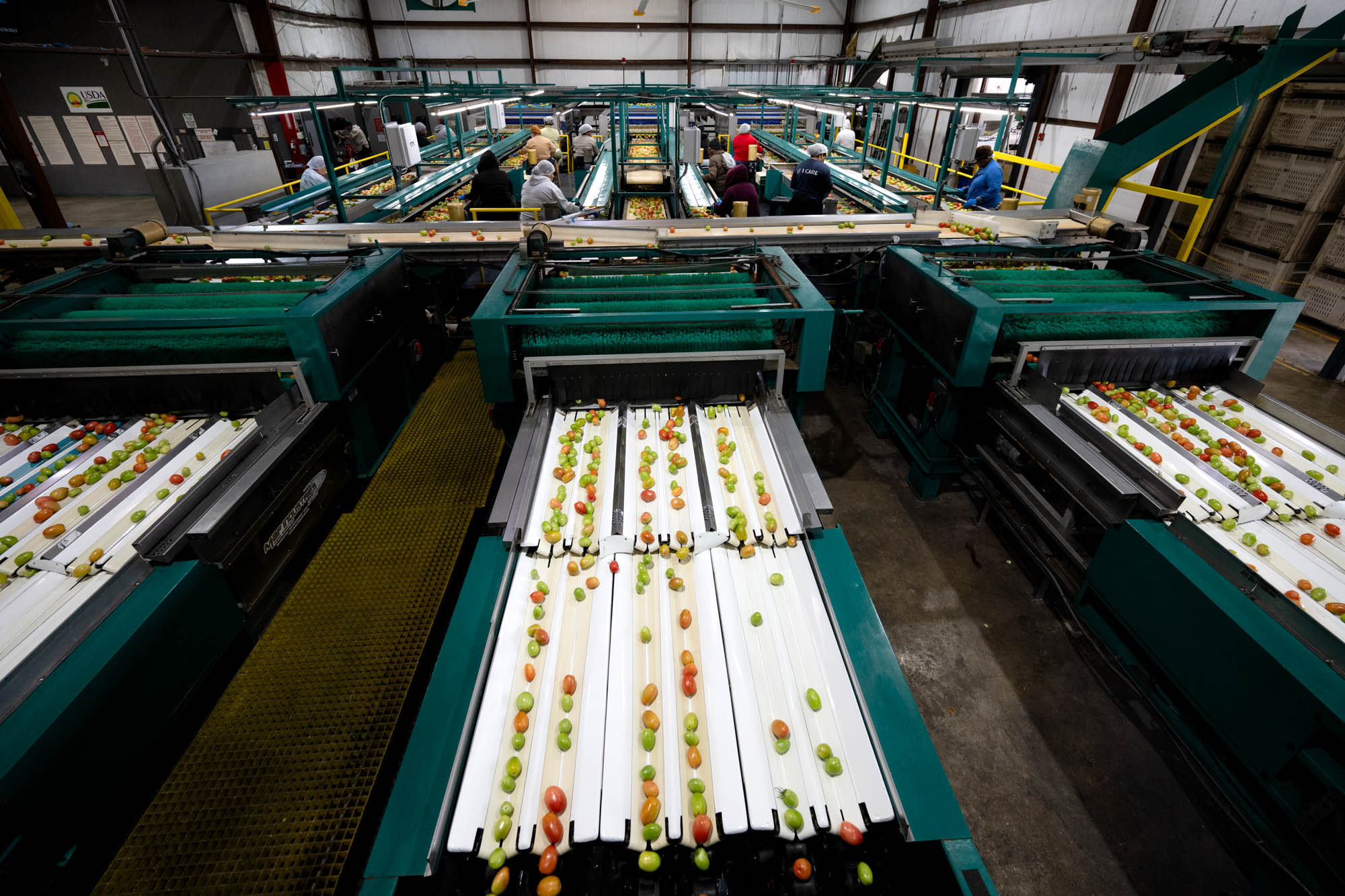
As every good salad knows, tomatoes make everything just ripe– especially when those tomatoes are the round or Roma variety from Palmetto’s own, West Coast Tomato. Bob Spencer is the president of West Coast Tomato, a family farm located in Manatee County. The business's origins trace back to the 1950s when John McClure, Spencer's wife's grandfather, founded it after moving from Virginia in pursuit of farming opportunities in Florida. In those early days, farming was characterized by numerous small operations, typically five to seven acres. Farmers would grow and pack their produce, then transport it to a central location for shipping, primarily to the Northeast. This reliance on rail transport meant that most packing houses were built close to railroad lines. Over time, Spencer's father-in-law, Dan Peyton McClure–a prominent community figure, having served 16 years as a county commissioner and 20 years on the airport authority–became involved in the company. Spencer, who met his wife when they were both in law school in Atlanta, joined the company in 1989, three years after practicing law. While his wife continues to practice today, Spencer was much more interested in a business career. He initially focused on sales, working alongside his father-in-law. Today, he co-manages the business: he oversees the packing house and land operations, while his brother-in-law manages the farming side. West Coast Tomato is a major local employer, with approximately 170 people working in the packing house and around 80 on the farms, plus more during the harvesting season. They grow their tomatoes in Manatee County and shift operations to Immokalee, east of Naples, during colder months for warmer temperatures. Although Florida once had about 25 tomato farms, West Coast Tomato is now one of only about five remaining competitors, which collaborate effectively. The company packages and ships its produce throughout the entire country. Despite thriving for over fifty years, the business has faced challenges, including current labor issues, extreme weather, and pest infestations. However, according to Spencer, these struggles have ultimately led the company to become more efficient and smarter in its operations. “I tell people that the rookies go to Vegas, the real gamblers go into produce,” he says with a chuckle. “There are no guarantees–the upside is you don’t have a lot of new people getting in because it’s so risky, but the downside is that you can lose a lot of money. We’ve learned to be very careful and operate with a long-term approach. We have become wise in how we plant and we’ve learned to have a positive attitude because there are a lot of negative things that can happen,” recalling a deep freeze back in 1989 that caused the company to lose almost all of its harvest. Spencer hopes the business will continue to grow over the years, noting that they will remain careful in how they move forward. He shares that they have been blessed with land that they’ve been able to sell as it matures, which has been very helpful for the company. “It’s been 36 years for me here–not something I would have anticipated in law school but it’s been a lot of fun,” says Spencer. “It’s truly a joy when you're helping to feed the country with American produce.”